
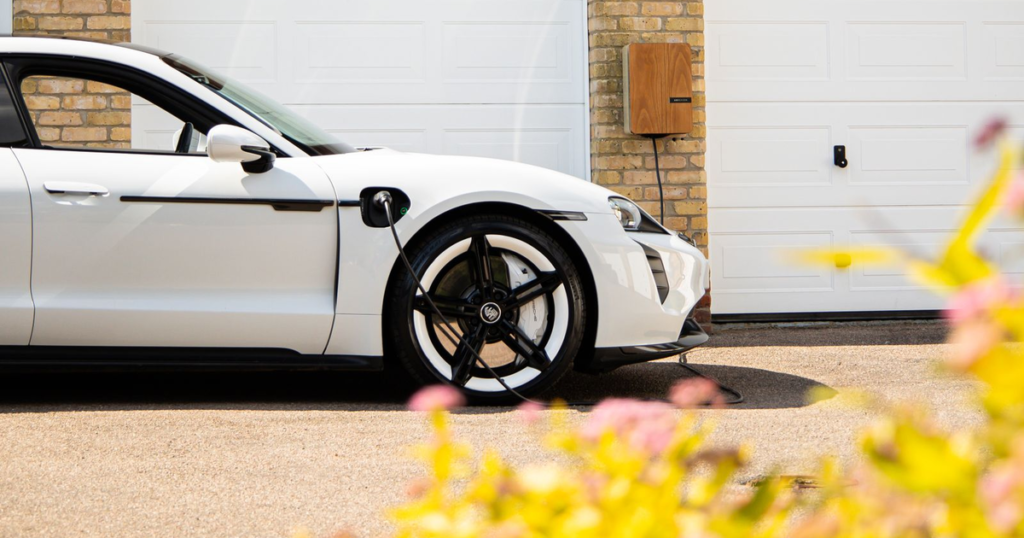
Electric cars have quietly become one of the most tax-efficient benefits a company can give a director or employee. The taxable benefit on a fully electric car is just 4% of its list price for 2026/27, against up to 37% for an equivalent petrol or diesel model. That part is well known.
What many business owners miss is what happens after the car is on the drive. Electric company car charging is a cost most directors quietly pay out of their own pocket, without realising the business can usually pick it up in full, tax free. Here is how the charging costs work, and how to put a claim in place.
The point most people miss
Where the car is a company car and fully electric, the company can reimburse you for the full cost of the electricity used to charge it, at home and at public chargers, with no benefit in kind and no National Insurance. The company also gets corporation tax relief on the cost.
The reason this catches people out is that the rules are different from a car you own personally. With your own car you can only claim for business mileage. With a company car there is no need to separate out private use at all. The whole charging cost can be met by the company, tax free.
Home charging
This is where the largest saving usually sits, because most charging happens at home.
When the company reimburses the cost of charging a company car at home, HMRC treats it as exempt. Nothing goes on your P11D and there is no Class 1A National Insurance for the company. To make a claim you simply need a reasonable way of measuring the electricity the car has used, which is where a smart charger earns its keep: most log every session in both kWh and cost, so the figure is ready to hand.
Two practical pointers. Make sure the cost is based on what you actually pay for electricity, whether that is your standard tariff or a cheaper overnight EV rate. And keep the charger’s report as your evidence.
Public and on-the-road charging
Charging the company car at public chargers can also be paid for or reimbursed by the company in full, again with no tax, whether the journey was business or private. Keep the receipts or the app history. For directors who charge on the move regularly, the simplest long-term answer is a charge card or account in the company’s name.
Installing a home charge point
If you do not already have one, the company can pay to install a home charge point at your home, and that is also tax free. Given the running savings above, it usually pays for itself quickly.
You can often go back four years
If you have been funding charging personally, you are not limited to this year. Claims can generally be backdated up to four years where the records exist. If your charger or energy app still holds the history, that data can support a claim for earlier years too.
A note on VAT
VAT works differently from the income tax position above, and it is the one area where home and public charging are not treated the same.
Public charging is generally subject to VAT at the standard 20% rate. Where the cost is met by the business for business journeys, that VAT can usually be recovered, provided you hold a proper VAT receipt and account for any private use.
Home charging is different. Domestic electricity is supplied to you as the householder, not to the company, and is charged at the reduced 5% rate. Because the supply is to the individual rather than the business, the company generally cannot recover that VAT, even though it can still reimburse the cost free of income tax and National Insurance, as set out above.
The sums on home charging are usually modest, but it is a point worth getting right, and the rules in this area continue to develop, so do check the current position with us.
A word of caution
The generous treatment above applies to company cars. If the car is owned personally, a different and more restrictive set of rules applies, and only business mileage qualifies. It is an easy distinction to get wrong, and getting it wrong means either under-claiming or, worse, creating an unexpected tax charge. It is worth a quick conversation to make sure your claim is set up correctly from the start.
How Praxis can help
Electric company cars remain a genuinely efficient way to reward directors and staff, and the charging reliefs make them better still. We can review your current position, confirm what you are entitled to claim, set up a simple process for capturing the costs each year, and put in any backdated claims that are due.
If you run an electric company car, or you are thinking about one, get in touch and we will talk you through the practical steps.
This article is general guidance and not specific advice. The right treatment depends on your circumstances, so please speak to us before acting.